
GHK-Cu in Skin & Tissue Research
GHK-Cu is a copper-binding tripeptide first isolated from human plasma. Decades of research literature show why it's a foundational skin and tissue-repair compound.
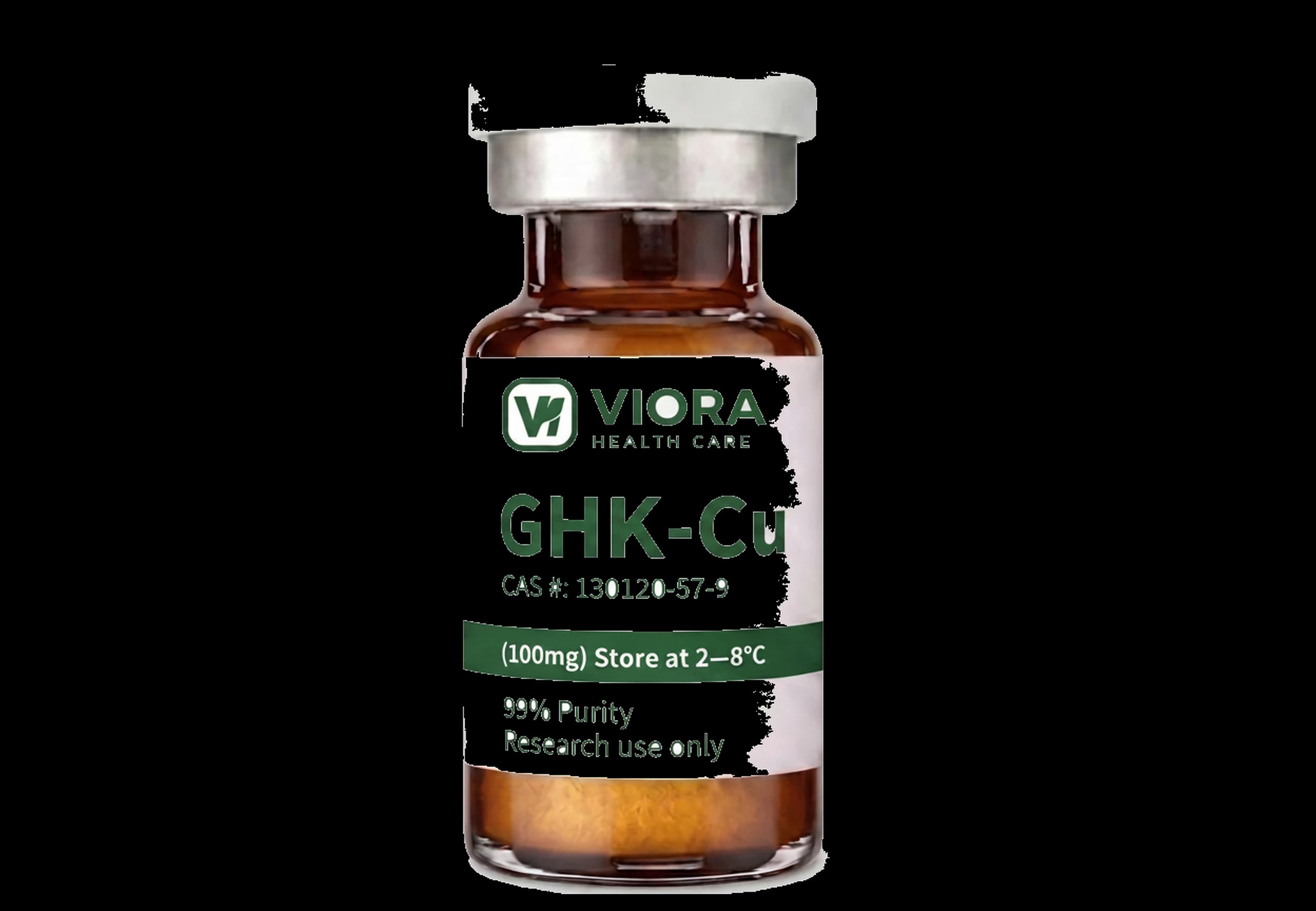
GHK-Cu (glycyl-L-histidyl-L-lysine copper) is a naturally occurring tripeptide first isolated from human plasma in the 1970s. The compound chelates a copper(II) ion, forming the GHK-Cu complex that has been studied extensively in skin biology, wound-healing assays, and extracellular-matrix research.
Mechanism Overview
GHK-Cu's biological activity is closely tied to its ability to bind and transport copper, a cofactor for many extracellular-matrix enzymes. Research has documented its influence on collagen and glycosaminoglycan synthesis, on the activity of metalloproteinases, and on the modulation of inflammatory and antioxidant gene expression.
Active Areas of Research
- Wound-healing assays and tissue-repair models
- Skin-aging and photodamage research
- Hair-follicle biology and stem-cell signaling
- Anti-inflammatory pathway studies
- Antioxidant and free-radical-scavenging activity
Quality Considerations
Because GHK-Cu's activity depends on the proper 1:1 GHK-to-copper ratio, batch consistency is critical. Reputable suppliers verify the copper-bound complex via UV-Vis absorbance at ~525 nm in addition to standard HPLC and mass-spec analysis.
References
- [1]Pickart L, Margolina A. Regenerative and Protective Actions of the GHK-Cu Peptide in the Light of the New Gene Data. International Journal of Molecular Sciences (2018). PMID: 30042334 ↗
- [2]Pickart L, et al. GHK Peptide as a Natural Modulator of Multiple Cellular Pathways in Skin Regeneration. BioMed Research International (2015). PMID: 26236500 ↗
All references link to the corresponding PubMed record. Citations maintained for transparency — Viora articles are sourced from the published research literature.