
GHK-Cu — Research Profile
GHK-Cu is a copper-binding tripeptide (Gly-His-Lys) complexed with a copper ion. Research has explored its role in extracellular matrix signaling, copper transport, and gene-expression modulation i...
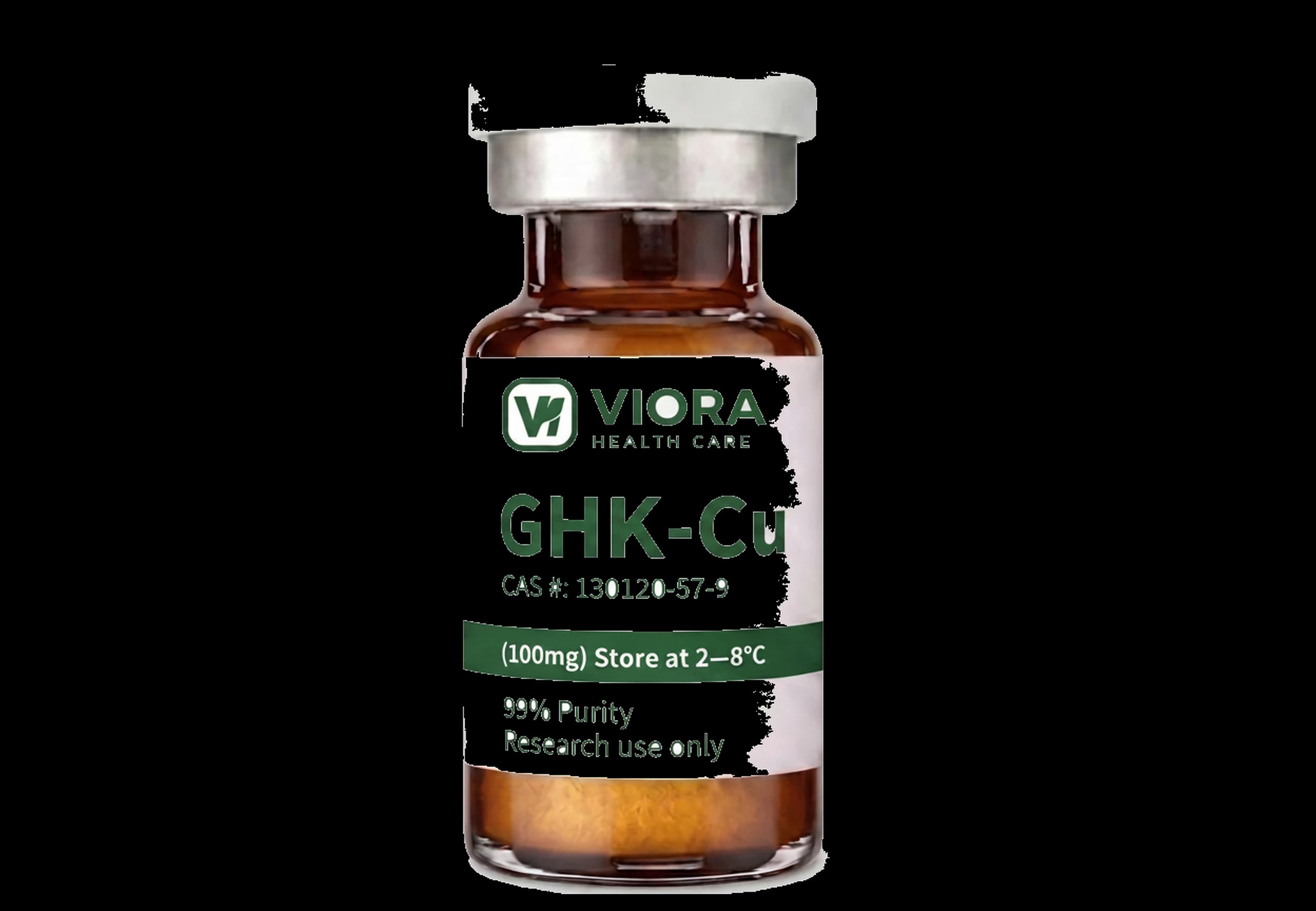
Overview
GHK-Cu is a copper-binding tripeptide (Gly-His-Lys) complexed with a copper ion. Research has explored its role in extracellular matrix signaling, copper transport, and gene-expression modulation in skin and connective-tissue models.
History
GHK was identified in human plasma in the 1970s, with subsequent decades of research focused on its copper-binding activity and influence on tissue-repair signaling. The Cu(II) complex form is the most studied configuration.
GHK-Cu Structure
- CAS #: 89030-95-5
- Molecular Formula: C₁₄H₂₃CuN₆O₄
- Molecular Weight: 402.91 g/mol
- PubChem ID: 71587328
Research Findings
GHK-Cu has been studied in dermal fibroblast cultures, wound-healing models, and gene-expression profiling experiments. Research has explored copper-mediated effects on collagen synthesis, antioxidant signaling, and tissue remodeling pathways.
Key Areas of Research
- Dermal: fibroblast signaling, collagen organization
- Copper: metalloprotein binding, ion transport
- Antioxidant: redox pathway modulation
- Gene expression: regulatory transcription studies
GHK-Cu's pleiotropic gene-expression profile in dermal models makes it a frequent subject in connective-tissue and aging research.
References
- [1]Pickart L. et al. GHK peptide as a natural modulator of multiple cellular pathways in skin regeneration. (2015).
- [2]Hong Y. et al. Modulation of cell-matrix signaling by GHK-Cu. (2014).
All references link to the corresponding PubMed record. Citations maintained for transparency — Viora articles are sourced from the published research literature.