
VH2-T — Research Profile
GLP-2-T (Glucagon-Like Peptide-2 Tesamorelin variant) is a synthetic peptide studied for its action on intestinal epithelial signaling. Research has focused on its role in modulating intestinal muc...
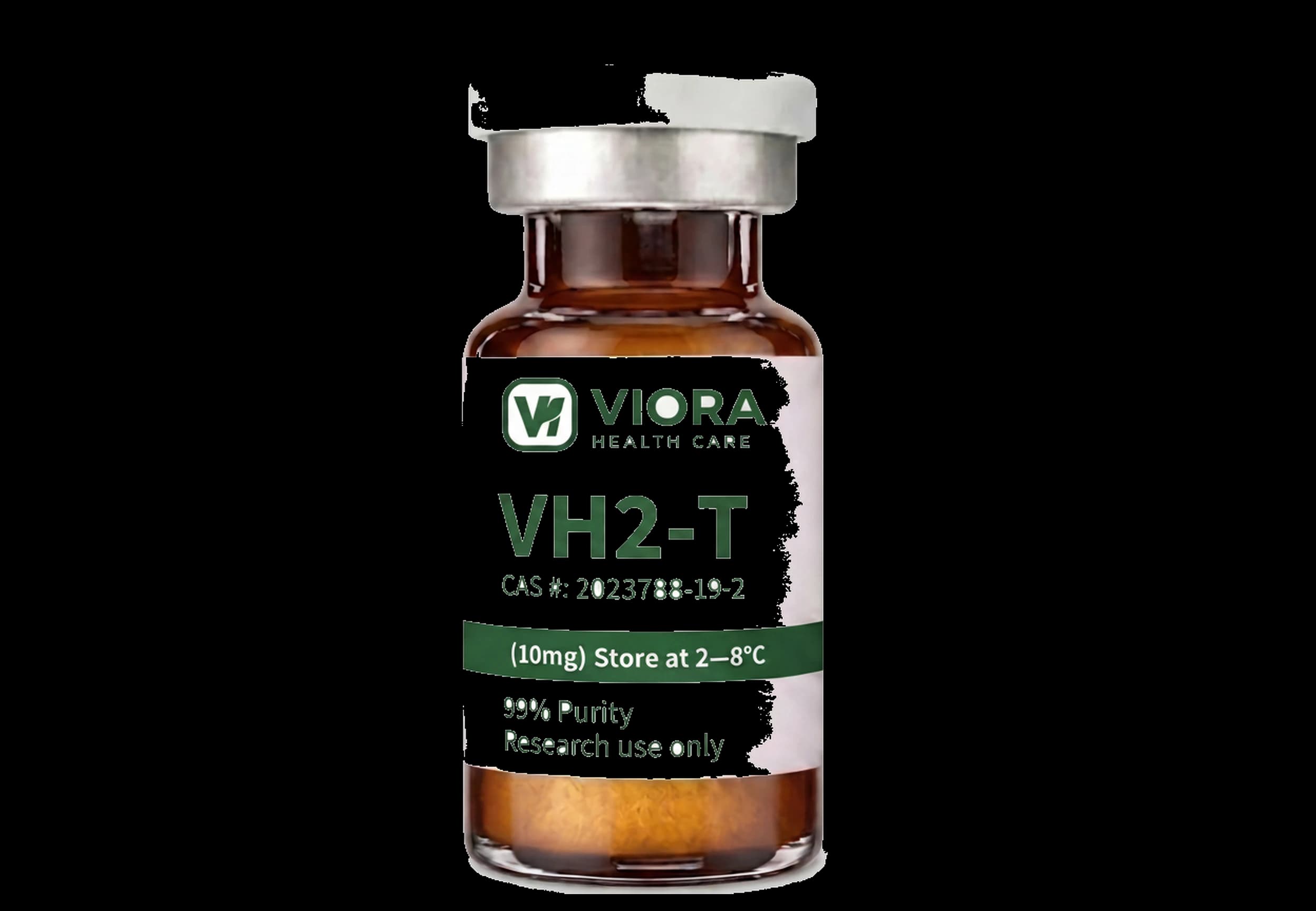
Overview
GLP-2-T (Glucagon-Like Peptide-2 Tesamorelin variant) is a synthetic peptide studied for its action on intestinal epithelial signaling. Research has focused on its role in modulating intestinal mucosal architecture, nutrient absorption pathways, and gut barrier dynamics in preclinical models.
History
GLP-2 was identified in the 1990s as a product of proglucagon cleavage, alongside GLP-1. Its targeted action on intestinal L-cells and epithelial signaling pathways led to extensive research into gut barrier and short-bowel syndrome models. The synthetic Tesamorelin variant studied here is one of several modified forms developed to extend half-life and stability.
GLP-2-T Structure
- CAS #: 223132-37-4
- Molecular Formula: C₁₆₄H₂₅₂N₄₄O₅₅S
- Molecular Weight: 3766.13 g/mol
- PubChem ID: 16131215
Research Findings
Preclinical research on GLP-2 and its synthetic analogues has explored intestinal epithelial proliferation, mucosal architecture changes, and tight-junction signaling. Models have spanned short-bowel preparations, malabsorption studies, and gut-barrier permeability experiments.
Key Areas of Research
- Intestinal: epithelial proliferation, villus architecture
- Barrier: tight-junction signaling, permeability dynamics
- Metabolic: nutrient transport, absorption pathway modeling
- Inflammatory: mucosal cytokine modulation
GLP-2 analogues are among the more pathway-specific peptides in current research, with a fairly well-characterized target system. They are frequently studied in models concerning gut barrier integrity and absorption.
References
- [1]Drucker D. J. et al. The biology of incretin hormones: glucagon-like peptide-1 and glucagon-like peptide-2. (2014).
- [2]Brubaker P. L. et al. Glucagon-like peptide-2 and the regulation of intestinal growth. (2002).
- [3]Yusta B. et al. GLP-2 signaling in the intestinal epithelium. (2009).
All references link to the corresponding PubMed record. Citations maintained for transparency — Viora articles are sourced from the published research literature.