
VH3-R — Research Profile
VH3-R is a research peptide studied in preclinical models for its tri-agonist action on incretin receptor pathways. Research has examined its influence on metabolic signaling, appetite-pathway rese...
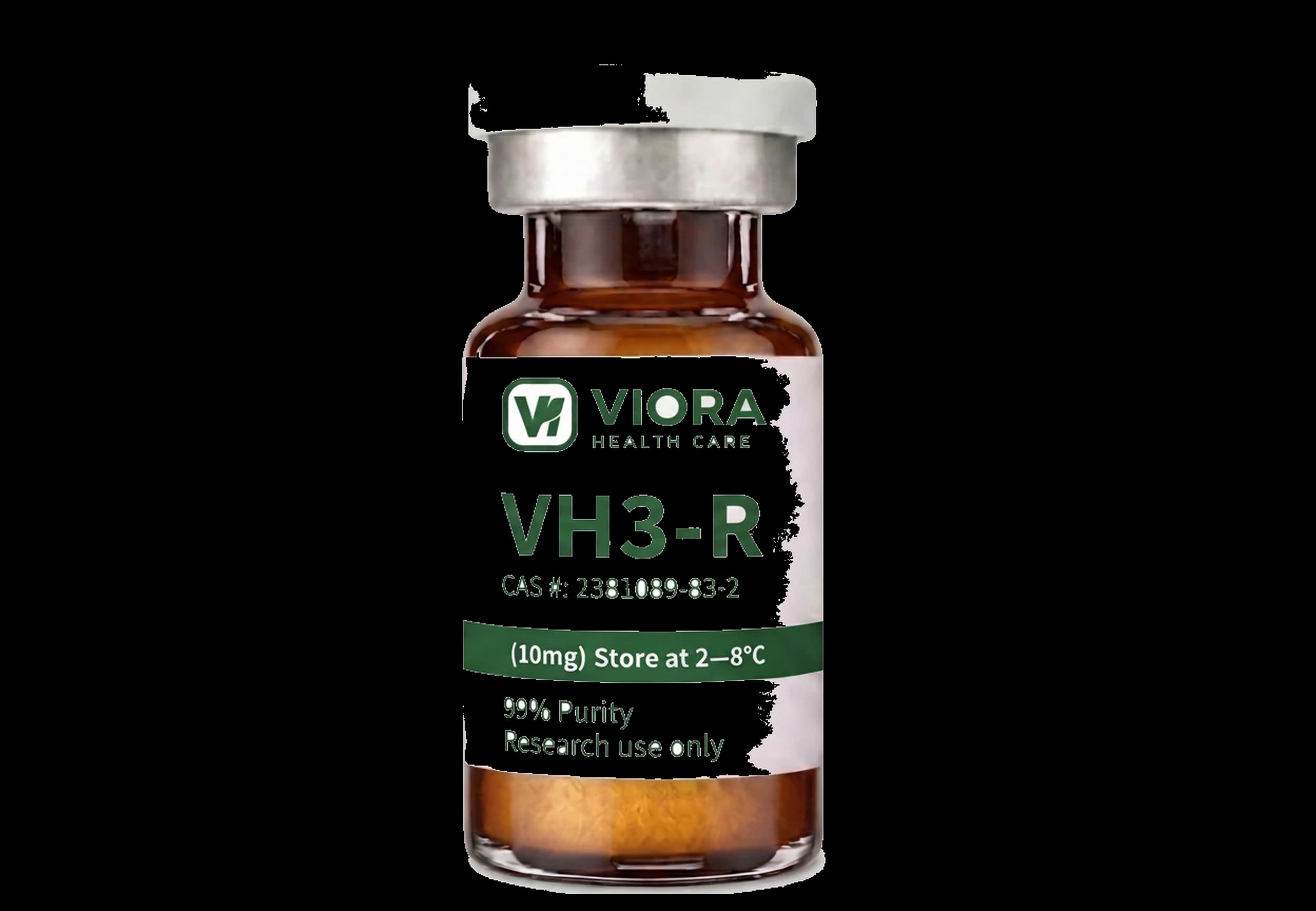
Overview
VH3-R is a research peptide studied in preclinical models for its tri-agonist action on incretin receptor pathways. Research has examined its influence on metabolic signaling, appetite-pathway research circuits, and glucose homeostasis pathways in cell and animal models.
History
Tri-agonist incretin peptides emerged from the broader GLP-1/GIP/glucagon receptor research program in the 2010s, as labs sought single molecules engaging multiple receptor systems. VH3-R is one of several research compounds in this class.
VH3-R Structure
- CAS #: 2381089-83-2
- Molecular Formula: C₂₂₆H₃₆₈N₆₂O₇₁
- Molecular Weight: 4731.34 g/mol
- PubChem ID: 171390338
Research Findings
Preclinical and early-stage human research has explored the action of tri-agonist incretin peptides on body-composition research, glycemic regulation, and lipid metabolism. The mechanism combines glucagon-like peptide-1 (GLP-1), glucose-dependent insulinotropic polypeptide (GIP), and glucagon receptor signaling.
Key Areas of Research
- Metabolic: GLP-1/GIP/glucagon receptor co-activation
- Body-composition research: lipid signaling pathway studies
- Glycemic: insulin secretion modeling
- Appetite: hypothalamic circuit research
Tri-agonist peptides represent an active area of peptide research with implications for understanding multi-receptor metabolic signaling. They are frequently studied alongside single- and dual-agonist comparators.
References
- [1]Coskun T. et al. LY3437943: A novel triple GLP-1/GIP/glucagon receptor agonist. (2018).
- [2]Jastreboff A. M. et al. Triple-hormone-receptor agonist VH3-R / retatrutide for obesity (phase 2 trial reference, Jastreboff et al. 2023). (2023).
- [3]Müller T. D. et al. Glucagon-like peptide 1 (GLP-1). (2019).
All references link to the corresponding PubMed record. Citations maintained for transparency — Viora articles are sourced from the published research literature.