
Tesamorelin — Research Profile
Tesamorelin is a synthetic analogue of growth hormone–releasing hormone (GHRH), modified to resist enzymatic degradation. Research has explored its action on the somatotropic axis and its effects o...
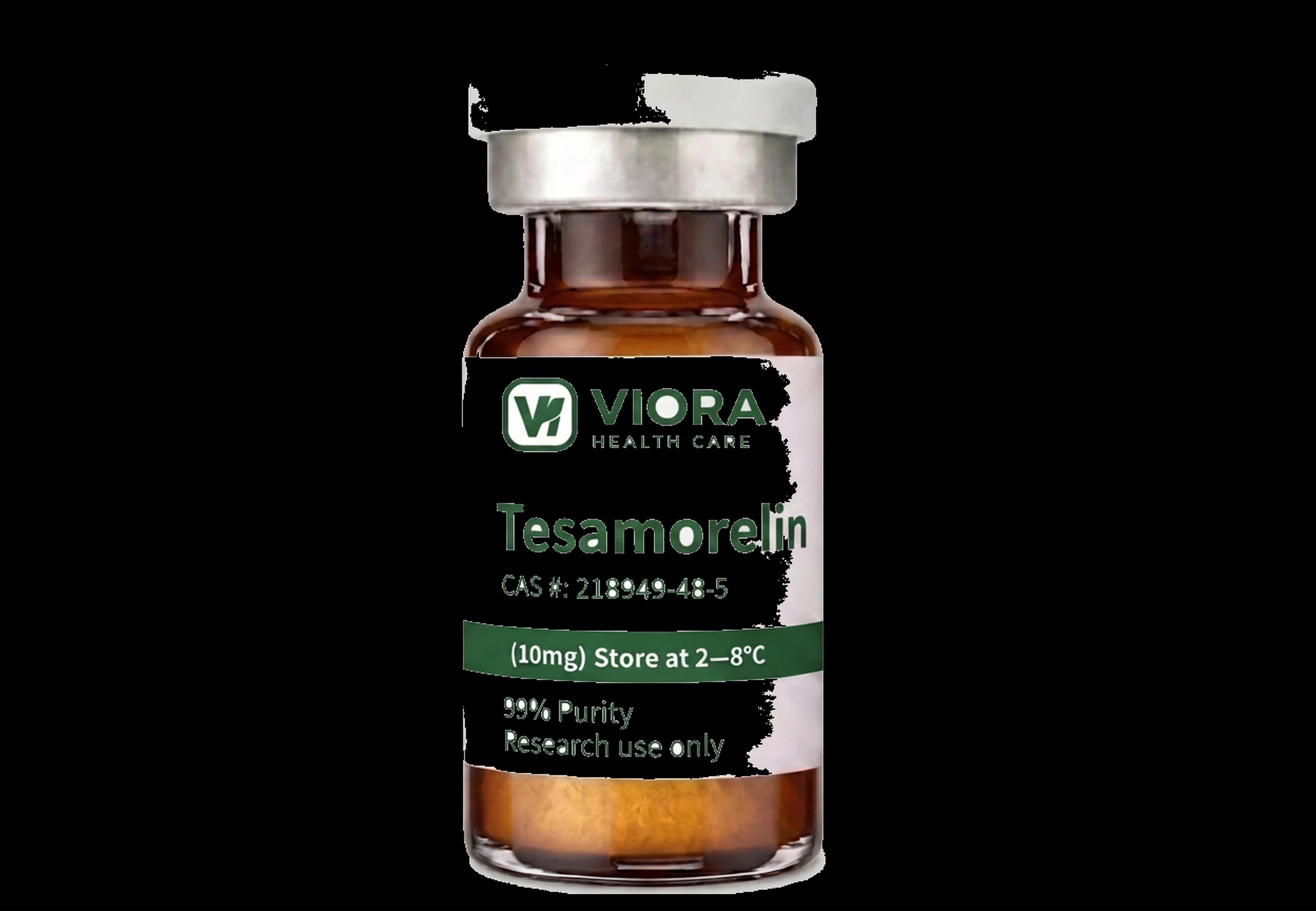
Overview
Tesamorelin is a synthetic analogue of growth hormone–releasing hormone (GHRH), modified to resist enzymatic degradation. Research has explored its action on the somatotropic axis and its effects on body-composition pathway signaling in preclinical and clinical models.
History
GHRH was characterized in the 1980s following the isolation of growth hormone–releasing factors from hypothalamic tissue. Tesamorelin emerged as a stabilized analogue with extended pharmacokinetic profile, becoming one of the more studied GHRH analogues in lipodystrophy and body-composition research.
Tesamorelin Structure
- CAS #: 218949-48-5
- Molecular Formula: C₂₂₁H₃₆₆N₇₂O₆₇S
- Molecular Weight: 5135.86 g/mol
- PubChem ID: 44147413
Research Findings
Tesamorelin has been studied extensively in clinical and preclinical models concerning the somatotropic axis. Research has documented its action on pulsatile GH release, IGF-1 levels, and visceral adiposity in HIV-associated lipodystrophy populations.
Key Areas of Research
- Somatotropic: GHRH receptor binding, pulsatile GH
- Metabolic: visceral adipose tissue modeling
- Endocrine: IGF-1 axis dynamics
- Composition: lean/fat mass distribution studies
Tesamorelin has one of the more well-characterized pharmacology profiles among research peptides, with established receptor binding and clinical pharmacokinetics.
References
- [1]Falutz J. et al. A placebo-controlled, dose-ranging study of a growth hormone–releasing factor in HIV-infected patients. (2007).
- [2]Stanley T. L. et al. Effects of tesamorelin on visceral fat and liver fat in HIV-infected patients. (2011).
- [3]Adrian S. et al. The growth-hormone-releasing-hormone receptor in clinical research. (2018).
All references link to the corresponding PubMed record. Citations maintained for transparency — Viora articles are sourced from the published research literature.